


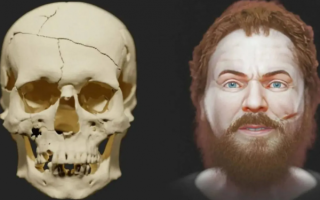
Since this desecration cannot be explained by environmental factors, experts believe it was carried out to prevent the man from returning as a 'vampire.' For the first time in centuries, it is now possible to see the face of the deceased after scientists reconstructed his image based on his skull. Archaeologist Natasha Sarkic, a member of the excavation team, stated that the fear the man inspired after his death may have been an extension of the fear he instilled in life. For the first time in over four centuries, the face of a man described as a 'vampire' has emerged, after his remains were deliberately desecrated post-mortem in an attempt to prevent his return from the dead, according to beliefs prevalent at the time. The body was found in a grave inside Racica Castle in eastern Croatia, where it was excavated, its head was severed, and then it was re-buried face down under heavy stones. Before he could even recover from the final shock, he was subjected to a final attack that cost him his life." She added: "It was believed that individuals who died a violent death, practiced violence in life, or were considered sinful or socially deviant were at risk of turning into vampires. This man may have been considered a vampire or a supernatural threat due to facial deformities and a marginal lifestyle characterized by recurring violence." She also noted: "Bioarchaeological analysis showed that this man repeatedly participated in violent conflicts, that he died a violent death, and that he had experienced at least three serious incidents of interpersonal violence during his life." She explained that "one of those attacks left a facial deformity, which may have caused fear and revulsion and led to his social rejection."